Structured floor inspections, captured on-site instead of rebuilt at the office.
Buristone will use custom Visorynt smart glasses to run and document floor inspections directly on-site. Speech, photos, measurements and customer wishes are filed against the right project as the visit happens — so the office receives a complete, checkable project draft instead of a pile of loose evidence. The pilot is in preparation; the language here describes what the system is designed to do, not measured results.
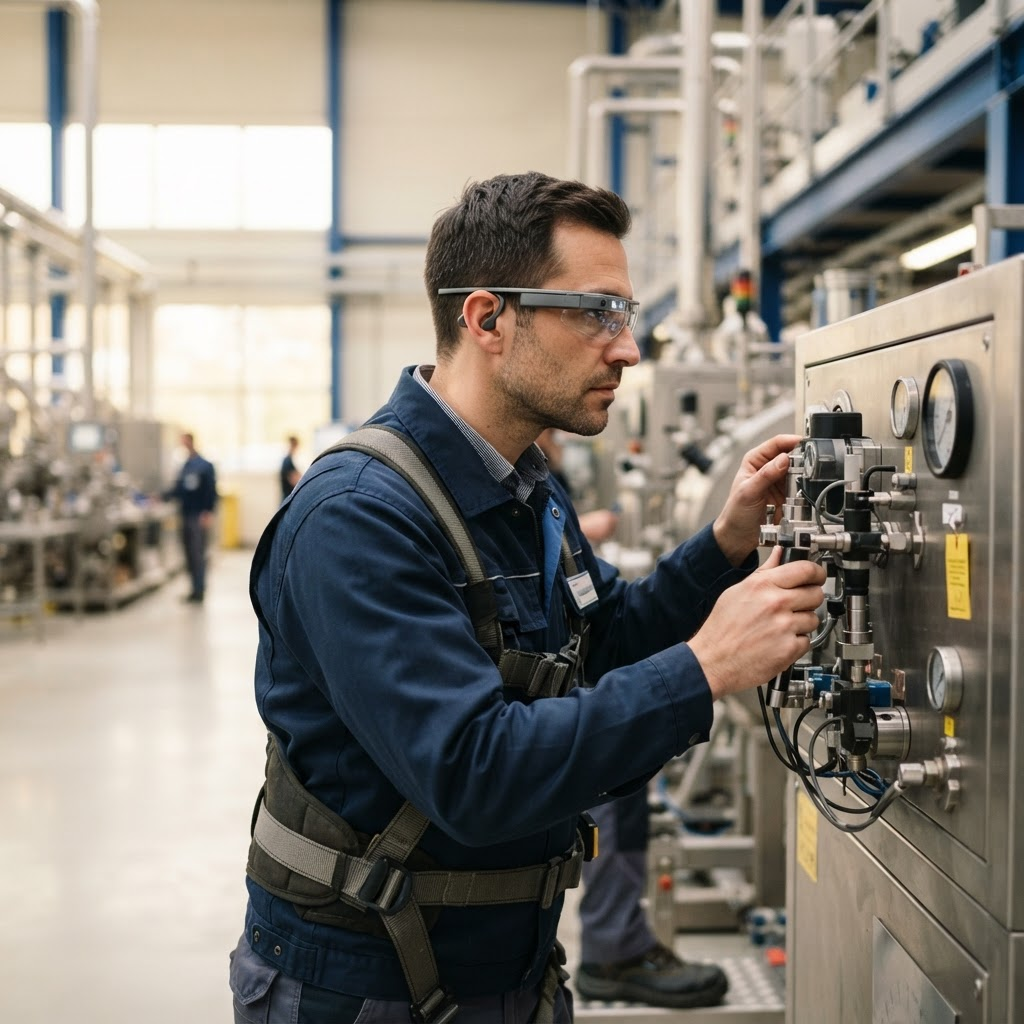
What a floor inspection has to capture
Before Buristone can quote a floor or coating project, an inspector visits the site and takes in a lot of detail at once: the type and condition of the existing substrate, the area and room layout, cracks, damp and unevenness, the desired floor system, colours and finishes, skirtings, steps and transitions, site access, the prep work required, plus photos, measurements and the customer's own wishes and deadlines.
Today that information can end up spread across handwritten notes, phone photos, voice messages and memory. Back at the office it all has to be sorted again and transferred into a quote — the same visit effectively documented twice. Visorynt is meant to reduce that media break.
Where the detail leaks out
None of this is anyone doing a poor job. It is simply what happens when the record of a visit lives in several places and has to be rebuilt hours later.
- Findings spread across notes, phone photos, voice memos and memory
- An unsorted phone gallery where it is later unclear which customer, room or reason a photo belongs to
- Quotes delayed because the raw material has to be reassembled first
- Follow-up calls to the inspector to clarify what a photo or note meant
- Cost-relevant risks and extras noticed on-site but forgotten by the time the quote is built
What the project sets out to change
The aim is not to change how Buristone's inspectors work — it is to remove the second, duplicated documentation job and make every visit follow the same standard.
- Capture the visit once, on-site, without slowing the inspection down
- File every photo, measurement and note against the right project and area automatically
- Make sure important questions, damage and extras are not forgotten
- Hand the office a complete, checkable project draft instead of scattered evidence
- Keep a person firmly in charge — the AI drafts, Buristone reviews and approves
What Visorynt is building
Not an off-the-shelf app, but a capture-to-draft pipeline on enterprise smart glasses, shaped around Buristone's own inspection process, templates and rules.
Vuzix smart glasses, tuned to the workflow
The solution runs on suitable Vuzix hardware with a custom Android application Visorynt adapts to how Buristone actually runs an inspection.
A guided inspection flow
The app walks the inspector through the visit step by step, and the flow can vary by project type — garage, terrace, living space, retail unit, industrial floor, stairs or a renovation.
Hands-free voice, photos and measurements
The inspector dictates findings, takes photos by voice command and records measurements while looking at the surface — each item filed against the right project and area.
A structured draft under human control
After the visit the system assembles a structured project draft, which an inspector or office colleague checks and confirms before anything is used for a quote.
How an inspector will use it on-site
The point is that it fits into the visit rather than interrupting it. Here is what a documented inspection is designed to look like.
- Before
Open the order
The inspector starts the customer's order on the glasses; name, address, contact, requested work and open questions from the first call appear in view.
- On-site
Guided walk-through
The app leads through capturing the object, existing floor, substrate, damage, area, desired system, customer wishes and access.
- On-site
Speak the findings
Free speech becomes structured detail — room, area, substrate, condition, desired finish — filed automatically to the right project and area.
- On-site
Photos tagged in place
A voice command like “photo of the crack by the garage door” attaches each image to the right room, damage or step — no unsorted gallery.
- On-site
Capture measurements
Areas and lengths are spoken or taken from a connected device. Binding measurements are still confirmed by the inspector or a proper measuring tool.
- On-site
Flag risks & extras
Cracks, damp, poor access, missing power or needed drying time can be marked on the spot, so cost-relevant items surface before calculation.
- After
Review the summary
Visorynt turns the visit into a structured draft — object, requirements, areas, condition, damage, photos, recommended steps and open questions — which a person checks and confirms.
- Office
Hand over & prepare the quote
The confirmed draft feeds calculation and a quote draft. Buristone still reviews and approves the final quote — responsibility stays with the company.
Where the information goes
Capture is only useful if the output lands where Buristone already works. The pilot centralises each visit into one structured project draft; deeper connections into Buristone's own systems are planned as later steps, not day-one claims.
What the pilot is designed to deliver
The pilot has not finished, so these are the outcomes the system is built to achieve, not measured figures. We will only publish hard numbers once we have verified them in real operation.
Sooner
Faster quote preparation
Because the information is already structured after the visit, a quote can be prepared and sent to the customer earlier.
Fewer gaps
More complete inspections
The guided flow is meant to reduce the risk of forgetting important questions, damage or cost-relevant extras.
Less rework
Less office work
Photos, notes, measurements and customer wishes no longer have to be merged by hand from several sources.
One standard
Consistent quality
New and existing inspectors are designed to follow the same inspection standard on every visit.
Guided
Faster onboarding
The glasses can lead an inspector through the required steps, so the visit depends less on any one person's memory and experience.
Austria-wide
A scalable field team
As Buristone covers more regions and inspectors, the same standardised process can be used across the country.
“Our inspectors should keep doing what they are great at on-site — not rebuild the whole visit again from memory back at the office.”
Where it could go after the pilot
The pilot is deliberately focused on one process done well. Once it is proven end to end, the same foundation opens up in several directions.
- A direct connection into Buristone's quoting software, with their own price lists and material and quantity calculation
- CRM updates, scheduling and tasks handed straight to the execution teams
- Site-progress documentation, defect lists and handover protocols
- Guided onboarding routines that walk new inspectors through the full checklist
- Remote support, so a master can see a live feed and guide a tricky assessment
- Customer approvals and digital signatures captured on-site
Got a process that gets documented twice?
That’s exactly where we started with Buristone. Show us one workflow that eats your team’s time and we’ll walk you through how the same capture-to-document approach would fit — no obligation, no jargon.